Student Achievements
Chemistry Research Assistant & Teaching Assistant of the Year
Graduate Research Assistant
Neetika
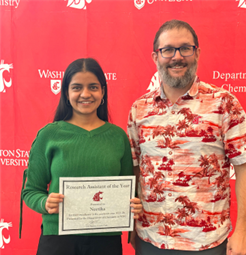
The Department of Chemistry proudly recognizes Neetika as the recipient of the Graduate Research Assistant Award. An exceptionally hardworking and talented researcher, Neetika has demonstrated excellence through her innovative research and scientific presentations.
In February 2026, she presented her work at the annual WSU Institute of Biological Chemistry conference, earning strong praise from attendees and faculty. Her outstanding presentation led to an invitation to participate in the site visit for a National Science Foundation multi-institutional grant at the University of Kentucky. There, she delivered a research talk that impressed members of the NSF review panel and highlighted the strength of WSU Chemistry research.
Graduate Teaching Assistant
Phong Huynh
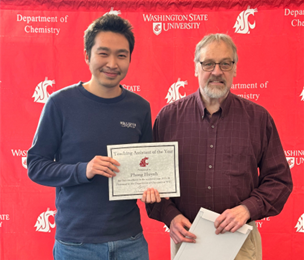
The Department of Chemistry proudly recognizes Phong Huynh as the recipient of the Graduate Teaching Assistant Award. As a teaching assistant for CHEM 410, Phong demonstrated exceptional dedication to student success through outstanding preparation, clear instruction, and a commitment to laboratory safety. He organized and optimized the lab space, completed experiments in advance, and provided students with patient, approachable guidance throughout the course. By fostering an inclusive, collaborative learning environment and maintaining high academic standards, Phong helped students build confidence and strengthen their chemistry skills. His positive impact on student learning and engagement makes him highly deserving of this recognition.
Undergrad Research Assistant
Wyatt Mintken
Wyatt Mintken received the Undergraduate Research Assistant Award in recognition of his outstanding contributions to research and academics. Wyatt is a dedicated and highly engaged student whose exceptional work ethic, professionalism, and collaborative spirit distinguish him among his peers. He works effectively alongside graduate students, contributing meaningfully to research efforts while demonstrating maturity and initiative. His strong analytical thinking, clear communication skills, and ability to present complex ideas with confidence have made a significant impact in both laboratory and classroom settings. Wyatt’s commitment to excellence, intellectual curiosity, and potential for future success make him highly deserving of this recognition.
Undergrad Teaching Assistant
Sarah Mutschler
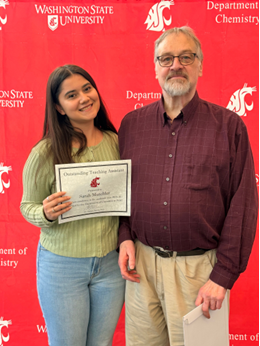
Sarah Mutschler received the Undergraduate Teaching Assistant Award in recognition of her outstanding commitment to student success, instructional excellence, and unwavering professionalism. As a teaching assistant for Organic Chemistry, Sarah led laboratory and tutorial sections with confidence, combining a strong command of the subject matter with the ability to explain complex concepts in a clear and approachable manner. She maintained high standards for laboratory safety, mentored students through experimental procedures and data analysis, and played a key role in grading, exam administration, and instructional support.
Sarah earned some of the highest student evaluation scores among her peers, reflecting the positive impact she had on the learning experience of those she taught. Equally impressive is her reliability and initiative. She consistently volunteered for time-sensitive responsibilities, responded quickly when assistance was needed, and could be trusted to independently manage challenging assignments. Her leadership and dedication made her an invaluable member of the instructional team.
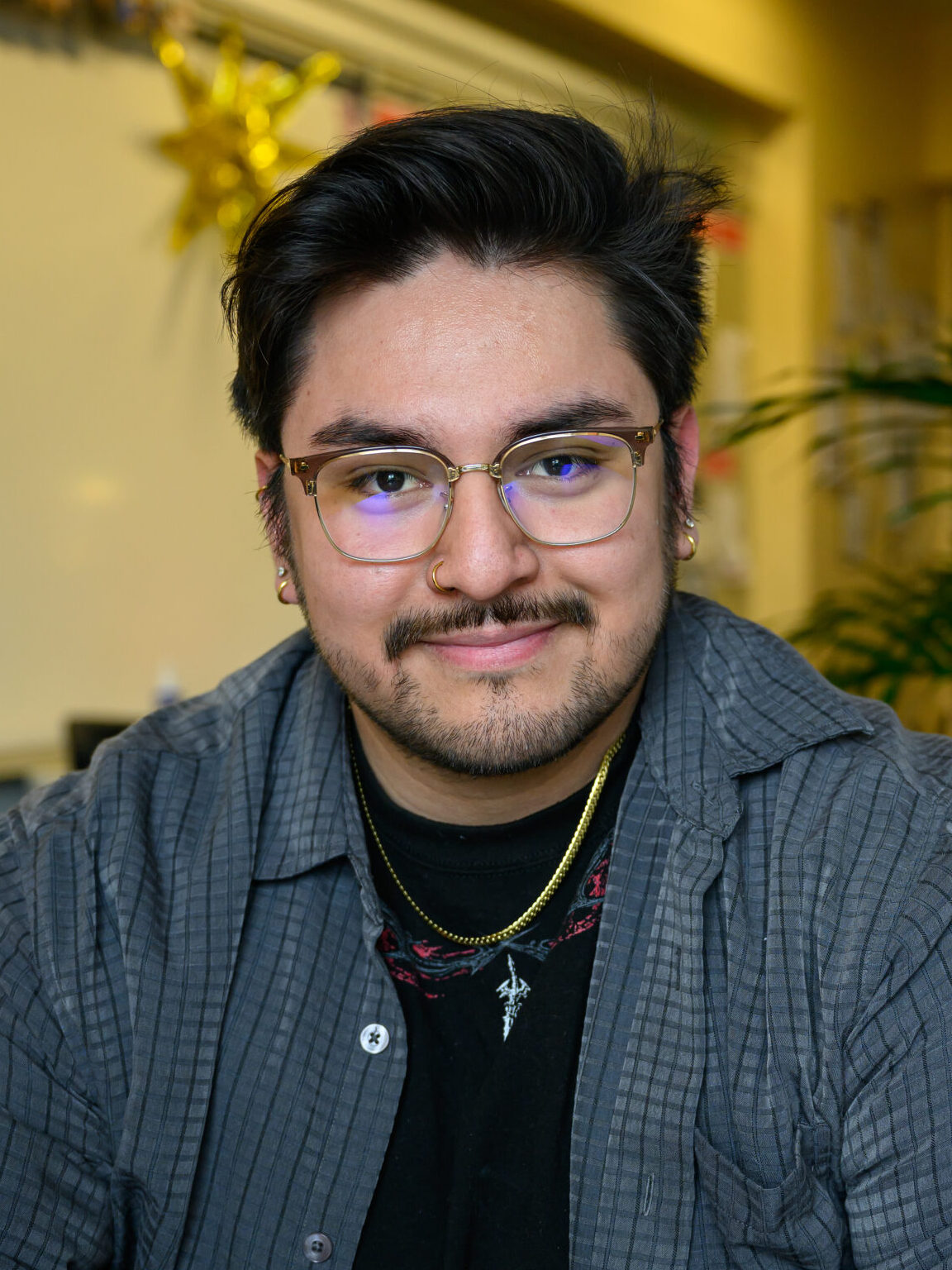
2026 Top Senior Award
Congratulations to Joan “Jo” Castaneda Gonzalez for being recognized as a 2026 Top Ten Senior! This achievement highlights Jo’s outstanding contributions and commitment to excellence. Jo is in Dr. Anjali Sharma’s research group. Keep up the inspiring work and continue to shine in all your endeavors. Well done!
Congratulations Graduates
Fall 2025—Summer 2026
BA Graduates
- Bouman Young
- Alexander Norman
- Joan (Jo) Castaneda Gonzalez (MAG)
- Jamie Jeschke
- Ryker Hazzard (CUM)
- Jessica Troyer
- Mikella Evans (MAG)
- Braeden Stiffler (SUM)
- Sinai Reyes
- Jonah Barnett (CUM)
- Juliane Alston
- Austin Kleha
- Bethanie Henderson (SUM)
- Chance Wilhelm (MAG)
- Breanna Durussel
- Tyler Yates (honors)
- Madeline Andrich (honors)
- Olivia Grace Swanlund
BS Graduates
- Gideon Tarekegn (CUM)
- Bridget Cleary (CUM)
- Zoe Lemchen (CUM)
- Timothy Walsh
- Molly Morris (MAG)
- Zoe Cera (CUM)
- Ethan Nguyen
- Simon Scheel (MAG)
- Madelyn Gallinger (SUM)
- Liam Noftsker (SUM)
- Molly Lauby (MAG)
- Clarissa Johahnson (MAG)
- Kenneth Goody
- Brandon Yap Ren Jiet
- Caanan Young
MS Graduates
- Rachael Bergman (Guo)
- Raphael Adewale (McEwen)
- Gustavo Gallardo (Clowers)
- Clare Riley (Guo)
PhD Graduates
- Vincent Groner (Boncella)
- Eric Jacobo (Brozik)
- Anunay Pulukuri (Berkman)
- Sohan Ahmed (Yoo)
- Aditi Dahiya (Bose)
- Ian Haltom (Boncella)
- Natalie Yaw (Guo)
- Brooke Bonar (Peterson)
- Shinhyo Bang (Guo)
- William McLeod (Bell)
- Elizabeth Groetsema (Clowers)
- Ryanne Ballard (Berkman)
- Matthew Heaney (Guo)
Symposium for Undergraduate Research and Creative Activities (SURCA)
John Hewitt
John Hewitt, a fourth-year student pursuing a B.S. in Chemistry with a minor in Mathematics, has found both curiosity and excitement in uncovering the deeper truths of chemistry.
John’s passion for the field took shape during his freshman year, sparked by a memorable insight from one of his early instructors: the further you go in chemistry, the more you begin to uncover the “lies” taught in introductory courses. While this idea might discourage some, it had the opposite effect on John. Instead, it fueled his curiosity. He became eager to push further into advanced coursework to better understand how chemistry truly explains the world around us.
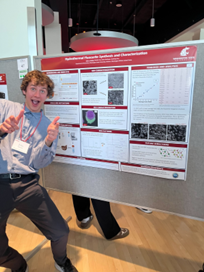
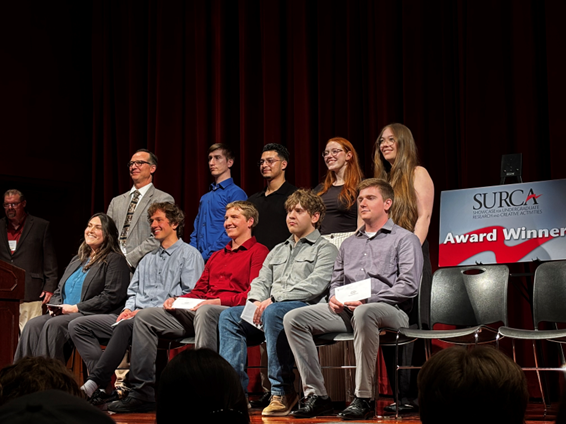
At this year’s Symposium for Undergraduate Research and Creative Activities (SURCA), John not only presented his research on rare earth element (REE) separation and the formation of REE fluorides in hydrothermal solutions but also earned a prestigious Gray Award for his work. He conducted this research under the mentorship of Dr. Xiaofeng Guo and Dr. Natalie Yaw from the Department of Chemistry, whose guidance helped shape both his project and his approach to scientific communication.
Throughout the SURCA experience, John developed a deeper appreciation for the importance of clear and engaging communication. “Initially, I tried to present my project using complex scientific language,” he explains. “But when I practiced with my roommates, I realized I was putting them to sleep.” Determined to improve, he reworked his approach—focusing on clarity and storytelling rather than jargon. By the time SURCA arrived, his audience not only understood his work but could explain it back to him and showed genuine excitement. “That was incredibly rewarding,” he shared.
John describes SURCA as an invaluable opportunity to learn how to translate complex ideas into accessible concepts, a skill he plans to continue developing. Inspired by his experience, he intends to participate in SURCA again next year.
Looking ahead, John has secured an exciting opportunity to continue his research at Los Alamos National Laboratory, the highest funded national laboratory in the United States. There, he will build on the work he presented at SURCA, contributing to ongoing advancements in his field.
“I can’t believe I’ve been given this opportunity,” John says. “I’m so excited to see what will come out of it.”
With his curiosity, dedication, and strong mentorship, John Hewitt is poised to make meaningful contributions to the field of chemistry—and his journey is just getting started.
Claire Johahnson
Claire Johahnson, a Spring 2026 chemistry undergraduate, recently presented at her first Symposium for Undergraduate Research and Creative Activities (SURCA)—an important milestone as she prepares for the next step in her academic career.
Originally from Seattle, Washington, Claire has long been drawn to chemistry. Her passion for the field was nurtured early on by her high school teacher, Dr. V, who helped spark her curiosity and encouraged her to explore the possibilities of science.
At SURCA, Claire presented her research titled “Synthesis Optimization of FPO42 – a Next-Generation Targeting Molecule for Prostate Cancer Therapeutics,” under the mentorship of Dr. Cliff Berkman. Her work reflects her commitment to using chemistry to make a meaningful impact—particularly in drug development, where she hopes to help improve treatments and patient outcomes.
As a first-time presenter, Claire found the SURCA experience both challenging and rewarding. Prior to this event, she had never created or presented a research poster. One of the biggest challenges she faced was learning how to clearly communicate complex organic chemistry concepts to an audience without an OChem background. Through this process, she developed valuable skills in simplifying her message and engaging with diverse audiences.
Claire sees SURCA as an important steppingstone for her future. The experience gave her confidence and practical skills that will benefit her as she transitions into her PhD program in Chemistry at Oregon State University, where she plans to focus on drug development research.
Her journey from discovering a love of chemistry in high school to presenting advanced research at SURCA highlights her dedication, growth, and passion for making a difference through science.
Logan Howard
Washington State University student Logan Howard is earning recognition for his growing impact in undergraduate research, recently receiving the Gray Award at the Symposium for Undergraduate Research and Creative Activities (SURCA). His project, “Acetone to Isobutene Cascade Reaction Utilizing Lewis Acid Base Properties of Spinels,” highlights both his technical skill and his ability to communicate complex ideas effectively.
Originally from Kennewick, Washington, Logan’s connection to WSU is deeply rooted. Both of his parents and his older sibling are alumni, and he now shares the experience with a younger sibling currently enrolled. This family legacy has helped shape his academic path and commitment to excellence.
Logan is pursuing a degree in Chemical Engineering with a minor in Chemistry, inspired largely by his experiences in the classroom. Organic chemistry captured his interest through the teaching of Dr. Ryan Joseph. Logan describes the subject as logical and creative, comparing chemical reactions to building with Legos—rearranging components to create something entirely new.
Motivated by that inspiration, Logan has served as a teaching assistant for Chemistry 101 and 105. He strives to bring energy into the classroom and make chemistry more engaging for students, believing that enthusiasm plays a key role in how students perceive and succeed in challenging subjects.
His SURCA project focused on biofuel conversion, offering insights with potential applications in sustainable energy. Preparing his award-winning research poster was both demanding and rewarding, requiring significant time and effort while helping refine his understanding of the work. Logan views the poster as a unifying element that brings together all aspects of a research project into a clear and cohesive story.
With strong academic achievements, teaching experience, and a passion for discovery, Logan continues to embody the spirit of undergraduate research at WSU.
Molly Lauby
This year marked Molly’s third and final SURCA as an undergraduate, making the recognition especially meaningful. Since arriving at WSU in August 2022 from Snohomish, Washington, Molly has embraced every opportunity to get involved in research, drawn initially by the university’s strong emphasis on undergraduate research and generous scholarship offerings. She found that environment lived up to its promise, noting that WSU’s inclusive approach makes it easy for undergraduates to find research opportunities and get involved early.
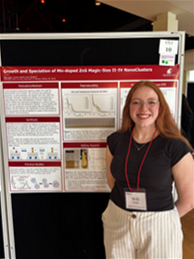
Molly’s work focuses on air-free chemistry techniques, requiring careful handling of materials in a controlled environment. “Everything I do is under nitrogen,” she explains, describing her work in a glove box, where oxygen and moisture are excluded to protect sensitive compounds. This specialized research has helped her develop precision, patience, and a deep understanding of chemical systems.
Beyond the laboratory, Molly values the opportunity SURCA provides to share and refine her work. She enjoys discussing her project with others, seeing these conversations as a chance to make complex science more accessible and to encourage fellow students to pursue research. Reflecting on her experiences, she notes that engaging with other presenters in past years helped her improve her own communication skills and confidence.
For Molly, SURCA is more than a showcase—it’s preparation for the future. “SURCA is a great opportunity to practice for summer conferences that can feel intimidating,” she says. Through presenting, answering questions, and learning from peers, she has built skills that will serve her well beyond WSU.
As she concludes her undergraduate career, Molly leaves behind a strong legacy of research excellence, curiosity, and collaboration. Her achievements highlight the impact of undergraduate research and the supportive community that helps students like her thrive.