Department News
New Integrated Sciences Building
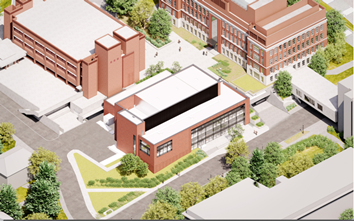
A new, modern building for chemistry and science education is being built on the site where Heald Hall currently sits and is scheduled to be open for the Fall of 2029. The ISB promises to be a fresh and inviting atmosphere for student learning and engagement and will feature a 250-seat lecture hall (complete with hoods and a small prep-room for lecture demonstrations), three state-of-the-art organic chemistry labs, and appealing spaces throughout for student study and collaboration. The lecture hall will feature tiers that each hold two rows of long tables, where students can swivel in their chairs to engage in teamwork on problem-solving with their classmates in the row behind them. All of the organic chemistry labs will be held in the new building, with possibilities for scheduling Chem 102 and/or Chem 104 labs as well. Demolition of Heald Hall is already underway, starting with interior demolition and hazard abatement. Construction of the ISB is scheduled to begin in 2028, after the complete demolition of Heald.
Written by: Dr. Paul Buckley
One Nuclear Initiative
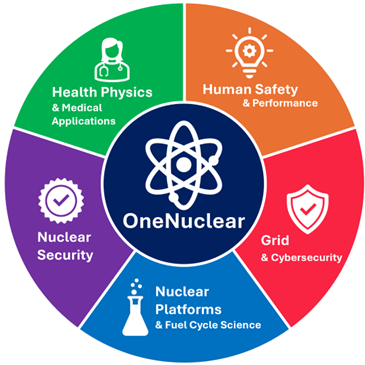
Dr. Ivan Popov has been selected as a Co-Lead of the National Security Pillar within Washington State University’s OneNuclear Initiative, a university-wide effort to unify and expand nuclear research, development, education, and strategic partnerships across the WSU system. The OneNuclear program brings together faculty and staff from multiple campuses and colleges to develop a coordinated roadmap for advancing WSU’s role in nuclear science, engineering, workforce development, and strategic innovation. The initiative is designed to position WSU as a national center of excellence in nuclear-related research and education. The National Security Pillar will focus on strengthening interdisciplinary capabilities in nuclear security, emergency response, nuclear detection, deterrence, nonproliferation, and regulatory science. The pillar will also identify future opportunities for research growth, workforce training, and partnerships with national laboratories, industry, and federal agencies. Dr. Popov’s leadership in computational chemistry, actinide science, and federally funded research programs will contribute to the development of sustainable long-term capabilities that support both United States national security priorities and WSU’s growing prominence in nuclear science and technology.
Written by: Iaroslav Gureev
Celebrating the Legacy of Dr. Michael Finnegan: Three Decades of Curiosity, Chemistry, and Community
For nearly 30 years, Dr. Michael Finnegan has been a cornerstone of the undergraduate chemistry experience, an educator whose influence extends far beyond the walls of Fulmer Hall. As he steps into retirement, our community reflects with gratitude on a career defined by passion, creativity, and an unwavering commitment to student success.
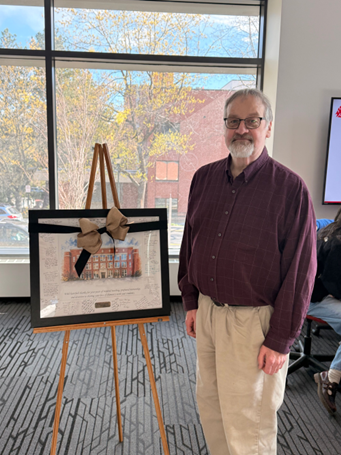
Generations of students will remember Dr. Finnegan not just for what he taught, but for how he taught it. His classes were known for their clarity, energy, and the unmistakable spark he brought to every lesson. He approached each interaction with his students with patience, humor, and genuine care. And then, of course, there were the demonstrations.
The Pit of Fulmer Hall became a rite of passage for chemistry students thanks to Dr. Finnegan’s unforgettable live demonstrations—moments where science leapt off the page and into vivid, explosive, awe‑inspiring reality. These demonstrations didn’t just entertain; they ignited curiosity, inspired confidence, and reminded students that chemistry is a living, breathing discipline. Halloween was an especially fun time in Fulmer because of Dr. Finnegan’s annual exploding pumpkin shows. He also put on demonstration shows for countless visiting elementary and middle school classes, for scout troops, and for the annual Chemistry Olympiad.
Beyond the classroom, Dr. Finnegan cultivated a sense of belonging that shaped the culture of our department. He was the professor who remembered names, who noticed when a student needed encouragement, who stayed after class to answer, “just one more question.” His mentorship helped countless students find their footing academically and personally, and many credit him as a defining influence in their careers.
As Dr. Finnegan begins this next chapter, his impact remains woven into the fabric of our program. The students he taught, the demonstrations he perfected, the curiosity he sparked, and the community he helped build will continue to shape our department for years to come.
We extend our deepest gratitude for his decades of service, his dedication to teaching, and the countless moments of wonder he brought to our halls. His retirement is richly deserved, though his presence will be deeply missed.
Thank you, Dr. Finnegan, for your excellence, your enthusiasm, and your enduring commitment to our students. We wish you joy, rest, and adventure in your well‑earned retirement.
WSU Graduate Student William Vance Receives Prestigious DOE SCGSR Award
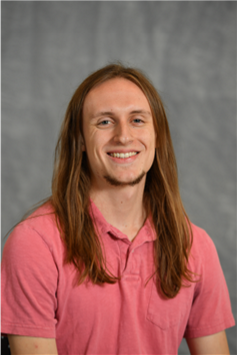
Washington State University proudly recognizes graduate student William Vance for receiving the highly competitive U.S. Department of Energy (DOE) Office of Science Graduate Student Research (SCGSR) Award. This national honor is awarded to exceptional graduate students whose work advances the mission of the DOE Office of Science, and William’s selection reflects both the strength of his research and his commitment to scientific discovery.
Under the mentorship of Dr. Xiaofeng Guo, William has distinguished himself through innovative, mission‑aligned research that contributes meaningfully to the broader scientific community. His achievement marks an exciting milestone for WSU, as he becomes the third student in Dr. Guo’s group to receive this prestigious award—further underscoring the growing prominence of WSU’s research enterprise.
The SCGSR Award provides recipients with unique opportunities to conduct part of their graduate research at a DOE national laboratory, fostering collaboration, expanding technical expertise, and supporting the next generation of scientific leaders. William’s selection highlights the caliber of talent emerging from WSU and the impactful work being carried out across our programs.
WSU extends its warmest congratulations to William on this outstanding accomplishment and looks forward to the continued success of his research career.
Chemistry Visitation Weekend Success
The Department of Chemistry hosted a highly successful Graduate Student Visitation Weekend, welcoming 16 prospective graduate students to campus for two days of networking, research discussions, and community building. The event showcased the strength of our graduate program and provided visitors with an opportunity to meet faculty, connect with current graduate students, and explore the many research opportunities available at WSU Chemistry.
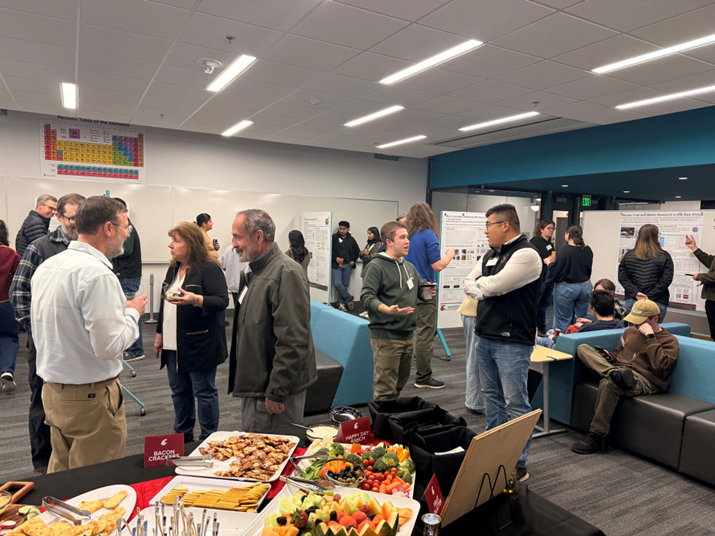
A total of 17 graduate student volunteers dedicated their time to helping coordinate and host eight events throughout the weekend, creating a welcoming and engaging experience for our guests. One of the highlights was the NUCS Dodgen tour, which provided a memorable opportunity for prospective students to interact with our graduate community in a fun and informal setting.
The weekend was an outstanding recruitment success. Of the 16 students invited to attend, 8 ultimately accepted offers to join our graduate program, resulting in a 50% acceptance rate. Their decisions reflect the strong sense of community, research excellence, and student support that define WSU Chemistry. We are grateful to our volunteers and faculty whose efforts helped make this recruitment event such a success.
Graduate Chemical Society (GCS) Recap
Over the past academic year, the Graduate Chemical Society (GCS) organized several events aimed at bringing graduate students together and strengthening the sense of community within the department.
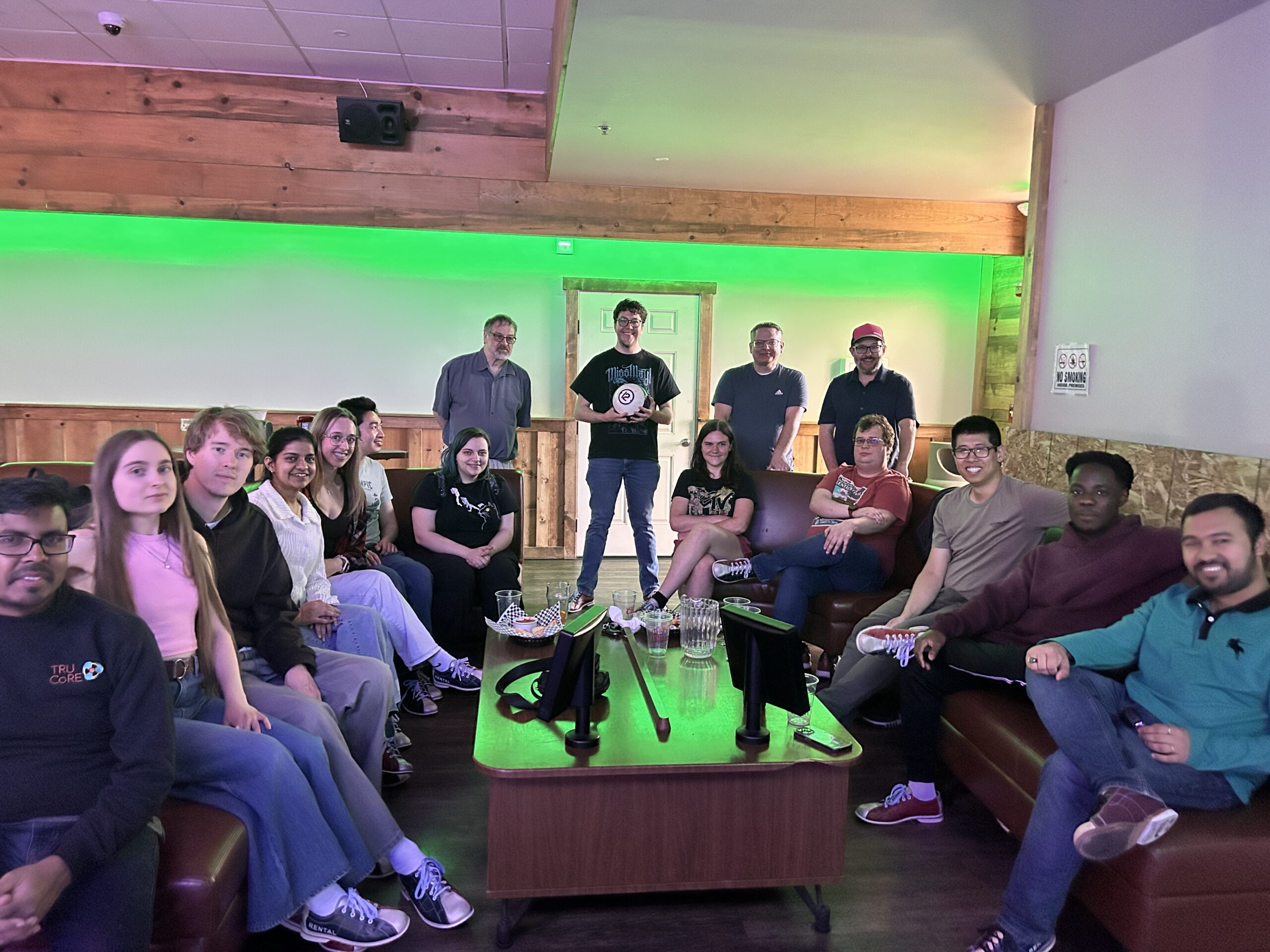
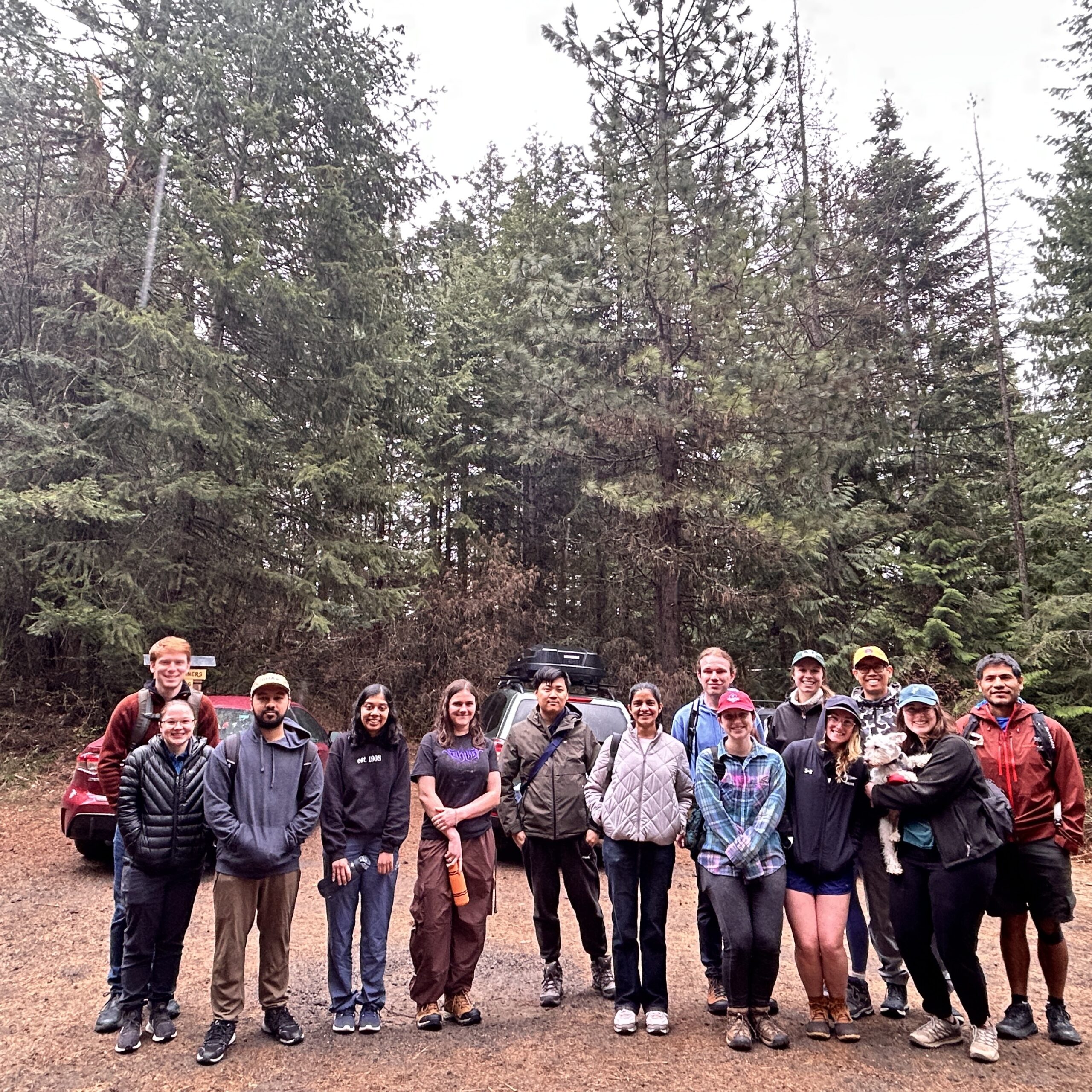
In the fall, GCS continued its annual tradition of apple picking at Bishop’s Orchard. Graduate students were invited to spend an afternoon picking apples and pressing fresh cider while enjoying time together outside of the university. GCS also collaborated with the Biology Graduate Student Association (BGSA) to organize a group hike at Moscow Mountain, providing an opportunity for students from different departments to meet and socialize. Near the end of the fall semester, graduate students gathered at My Office for a holiday party to celebrate the end of another semester and the year.
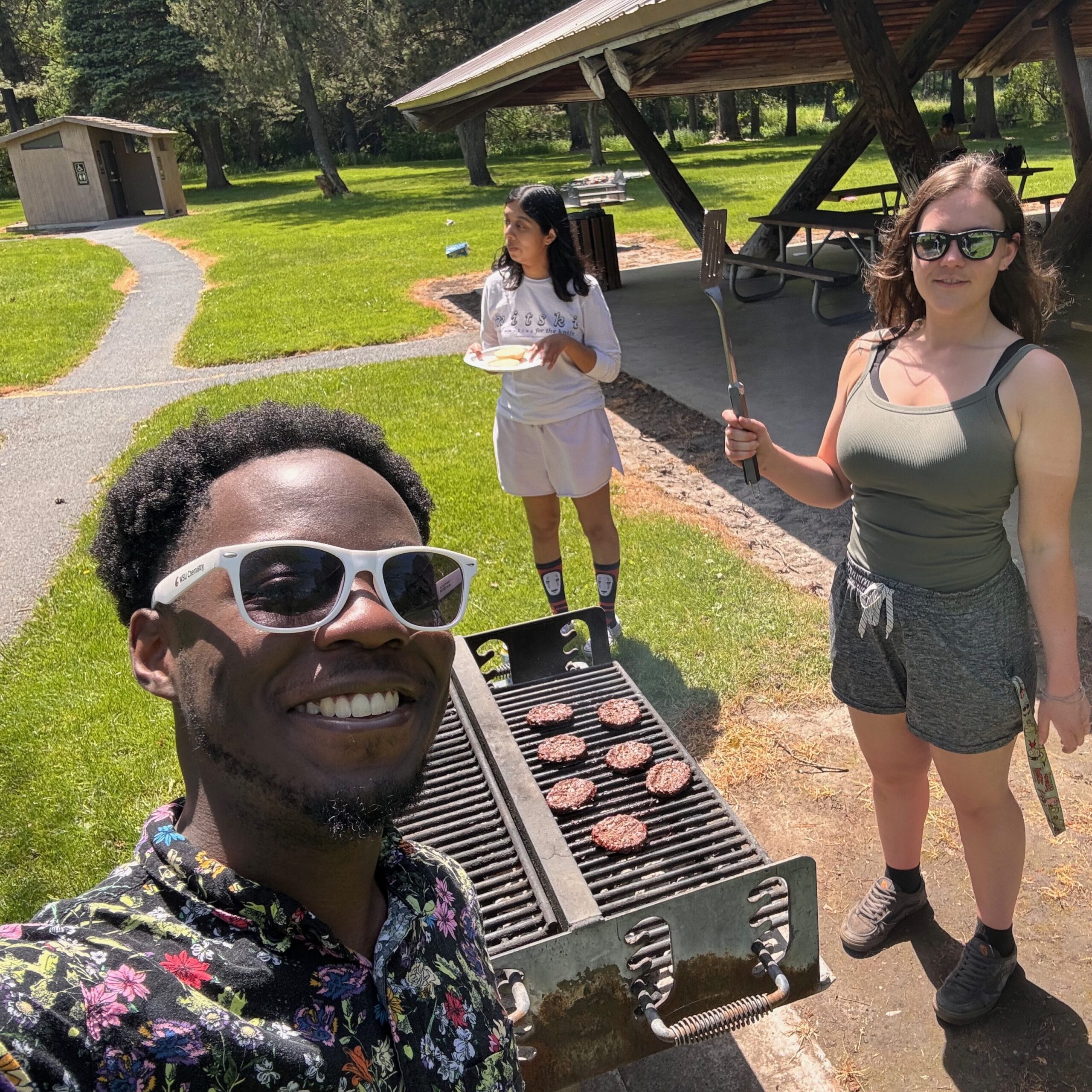
In the spring, GCS hosted a bowling night at Zeppoz, open to the entire chemistry department, and provided a relaxed setting for students, faculty, and staff to interact. To conclude the spring semester, GCS hosted a field day at Klemgard Park in May, where graduate students enjoyed a barbecue, outdoor games, and an afternoon of socializing.
In addition to these larger events, GCS also holds general member meetings each month to discuss upcoming events and a coffee hour to help graduate students get more acquainted with each other.
Chemistry Club
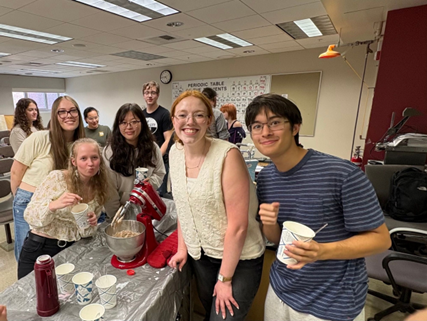
On September 10, the Chemistry Club organized their much-anticipated annual ice cream social, which took place on the fourth floor of Fulmer Hall. This event is a highlight of the academic calendar, as it provides both new and returning students with an opportunity to mingle and foster connections. The club members showcased their scientific prowess by creating the ice cream using liquid nitrogen, a method that not only fascinates attendees but also demonstrates the practical application of chemistry in everyday life. Liquid nitrogen, which has a temperature of approximately -196°C (-321°F), rapidly freezes the ice cream mixture, resulting in an exceptionally smooth and creamy texture. This innovative approach not only adds an element of excitement and spectacle to the event but also serves as an engaging way to spark interest in the field of chemistry.